Home / Design for Nature / River Reef
Project 03
River Reef
An interlocking clay tile that gives fish in the Thames somewhere to swim through, shelter and lay their eggs.
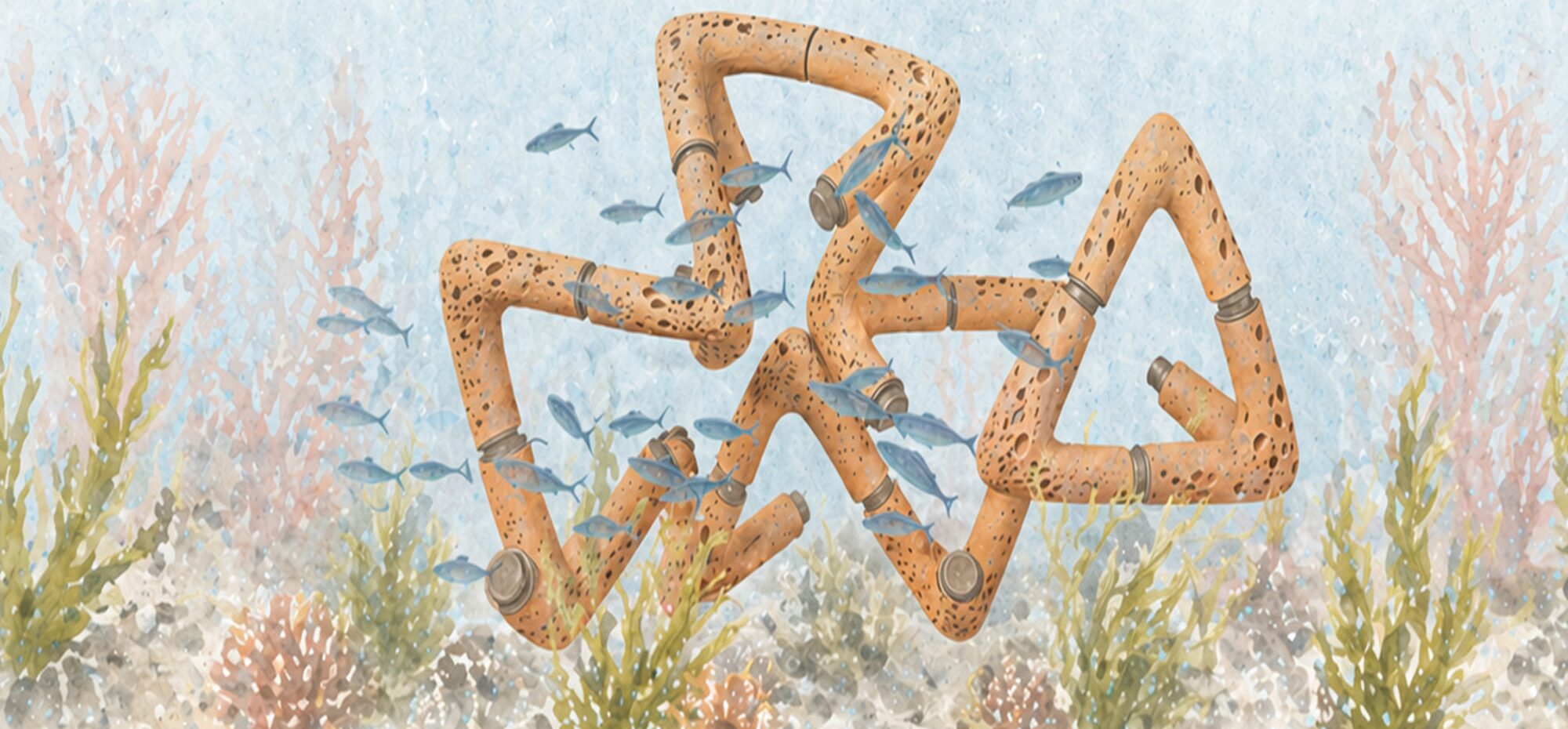
The River Reef tile is designed to restore biodiversity along the Thames riverbank. It is an interlocking modular system that protects microhabitats so aquatic life can settle, recover and flourish.
The design is inspired by aquatic structures and evolved from artificial coral and algae formations to tetrapod geometry. As the form developed through sketches, precedent studies and physical models, repeatability, ease of production and the connection between pieces became central.
How it works
The tile acts as an artificial reef. Its navigable passageways let fish swim through and nest, while its enclosed pockets shelter smaller fish. The porous surface gives secure cavities where fish can lay eggs out of reach of larger predators, much like a natural coral reef. Tiles stack and interlock in multiple orientations, and over time they gather coral and algae.
Gallery
The reef at scale
Tiles stacked and interlocked into a reef, with fish moving through the passageways.